Minnie Watzka
The Master Butchers Singing ClubMinnie Watzka is an absent but consequential figure in the lives of Roy Watzka and Delphine Watzka. Roy remembers her as the woman he loved deeply, while Delphine knows her through stories, photographs, and objects she imagines once belonged to her. Minnie’s indistinct presence gives form to Roy’s grief and to Delphine’s childhood longing for a mother; ultimately, that longing accompanies Delphine into Waldvogel’s Meats, where she meets Eva Waldvogel.
Identity and Background
Minnie is the woman everyone assumes to be Delphine’s mother. She is no longer present in the family’s life by the time Delphine is a baby, and the account does not establish when or how she died or left. Roy never explains what happened to her, and Delphine never learns the answer from anyone else in town. The silence leaves Minnie’s history unresolved rather than turning her into a fully known biography.
Roy’s stories nevertheless make Minnie vivid in the town’s memory. The photographs he keeps offer little certainty about her personality: in one she is turned partly away, her mouth set in an expression that could be suspicion or merely the effect of the sun; in another she is blurred by movement; in a third, a chicken and her hair obscure her face. These images do not provide Delphine with a clear portrait. Instead, their interruptions and ambiguities become the material from which she imagines her mother.
Roy’s Love and Grief
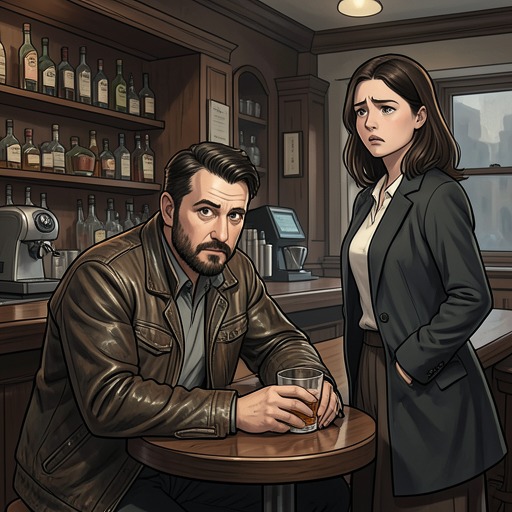
Roy’s attachment to Minnie is presented as more than the habit of an everyday drinker. He had loved her with depth and gratitude, and after she was gone he made a private devotional practice of her photographs. Some nights he arranged votive candles on his dresser, drank, and spoke to the pictures until he seemed to hear Minnie answer. In his memory, her face softened under the influence of the words he had spoken to her. The photographs thus hold both the evidence of her absence and the remembered happiness Roy cannot recover.
In the years after Minnie’s departure, Roy moved in and out of drinking while Delphine was still very young. Prohibition did not prevent him from drinking: he turned to hair tonic, orange-flower water, cough syrups, and other preparations as substitutes for alcohol. The pattern gradually changed in its own right: what began as grief associated with Minnie became increasingly dependent on drink, and Roy damaged the organ he had mistaken for his heart. By the time Delphine was ten, she knew her father chiefly as an alcoholic, while Minnie remained young and mysterious in the dresser photographs.
Delphine’s Inherited Absence
Delphine’s knowledge of Minnie is assembled from scraps. She wonders whether the objects in her tiny room once belonged to her mother: a black lacquer bureau and a picture of a wave breaking against a rock. The thought is not confirmed by Roy, but it gives the room’s possessions an intimate significance. Delphine’s mother is both the person she misses and the imagined source of things she can touch and keep.
The most personal of these objects is a small white stone in a wooden cigar box, wrapped in the end of a torn muslin scarf. When longing took hold, Delphine wound the scarf around her wrist and held the stone in her mouth, tracing its blunt edges with her tongue. She returned to this private comfort especially in the late afternoon, when sunlight came through the western window. At twelve, she put the stone away and stopped the habit. The change did not remove her need for a mother; it marked her growing awareness of what she had missed.
Seeing other girls with their mothers could make Delphine’s head swim and her neck ache, but she did not ask a teacher or a friend’s mother to fill that need. She was too shy and stubborn to approach them, and her longing remained at once buried and urgent. Her mother’s obscured photographs and the box’s small keepsake offer no answer to what happened to Minnie, but they preserve the outline of a relationship Delphine never had the chance to experience.
Narrative Significance
Minnie’s absence shapes the narrative through what cannot be known. Roy’s loving account gives her a powerful emotional presence, yet the photographs themselves remain blurred, interrupted, or turned away. Delphine’s imagination fills that gap with daydreams, familiar objects, and a wish for one clear look at her mother’s face. The contrast between Roy’s remembered intimacy and Delphine’s unanswered need makes Minnie more than a figure in the family’s past: she is a shared absence experienced differently by father and daughter.
That longing also connects Minnie’s story to Delphine’s next turning point. After the crisis at Roy’s house, Delphine is relieved that she and Cyprian have not destroyed the house, because the photographs are still there in the top drawer of the black lacquer bureau. As she drives into town, she wants to return to them and to the white stone. In that moment of yearning for a face she has never clearly seen, she enters Waldvogel’s Meats and meets Eva Waldvogel. Minnie’s unseen presence therefore helps frame the beginning of Delphine’s relationship with Eva: the need born from an absence becomes the threshold to a consequential new bond.